
How Long Do Custom Handmade Gifts Take in 2026?
Table of Contents
- Why Custom Handmade Gifts Take Longer Than Mass-Produced Items
- Average Production Timelines for Popular Handmade Gifts
- Personalized Gift Lead Times: What Affects the Clock
- Made-to-Order Gift Shipping Expectations vs. Processing Time
- Tips for Ordering Personalized Holiday Gifts Before the Seasonal Peak
- Rush Fees, Tracking, and Quality Control Buffers
- How to Calculate Lead Time and Communicate With Makers
- Conclusion
- Frequently Asked Questions
Last Updated: September 14, 2026
Why Custom Handmade Gifts Take Longer Than Mass-Produced Items
Custom handmade gifts take longer because a single artisan builds each piece by hand, from sourcing material to engraving your personalization, rather than running it down an assembly line. How long do custom handmade gifts take? Usually two to six weeks, and the reason is sequence (Get started with contracting).
A mass-produced item is stamped out in seconds and warehoused before you order. A made-to-order gift starts its clock when your order lands: someone selects the wood, cuts it, sands it, engraves the design, seals the surface, and lets it cure before shipping. None of those steps can be rushed without showing in the final product.
That is the trade-off Copper Fox Co builds its workshop around: every piece is made after you order it, which is why it arrives looking like something made for one person instead of ten thousand.
Average Production Timelines for Popular Handmade Gifts
Most handmade gifts fall into a predictable window: roughly one to three weeks of production before shipping, depending on material and personalization (etsy.com). Two categories dominate the personalized gift market, and their timelines differ.
Cutting Boards and Engraved Wooden Items
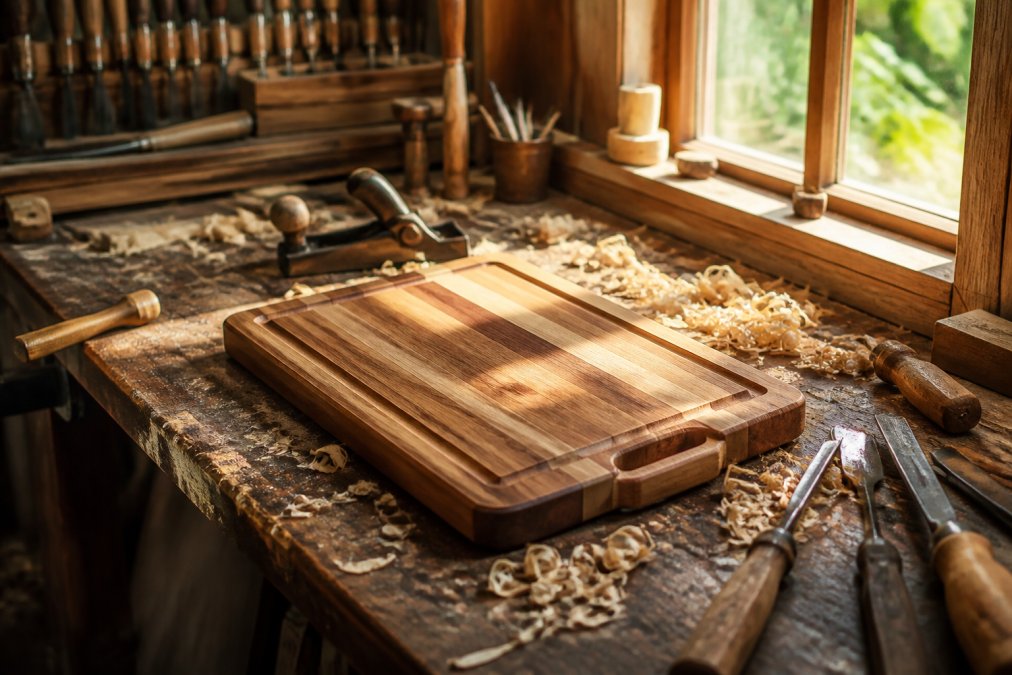
Engraved wooden pieces need the longest runway. A personalized cutting board is cut, sanded through several grits, engraved, then finished with a food-safe oil or wax that must soak in and cure. Skipping the cure means the finish wears unevenly.
At Copper Fox Co, the Handwritten Recipe Cutting Board is a good example: your recipe image is reviewed and edited by the design team before engraving, adding a design-review step that plain text personalization skips. Boards with optional gift boxes add a few days for packing.


Custom Candles and Monogrammed Frames
Candles and frames move faster, but not instantly. A custom candle must be poured and left to set, and a monogrammed frame needs its engraving cut and finish cured. Neither tolerates a shortcut, because a rushed pour or uncured finish shows up as a flaw.
Personalized Gift Lead Times: What Affects the Clock
Personalized gift lead times are the total time from your order to your doorstep, and they stretch or shrink based on four things: material sourcing, complexity of the design, curing and drying time, and the queue ahead of you.
Material Sourcing, Curing Time, and Drying Time
Material sourcing is the variable most buyers overlook. If a maker stocks your chosen wood or hardware, production starts immediately; if it must be ordered, you've added days before the first cut. Curing and drying are non-negotiable: finishes and poured wax need time to stabilize, and rushing doesn't change the chemistry.
A common mistake is assuming a maker can compress curing by working faster. They can't. The finish sets on its own schedule, and shipping early risks a tacky surface or a cracked pour.
Made-to-Order Gift Shipping Expectations vs. Processing Time
Made-to-order gift shipping expectations should separate two clocks buyers constantly merge: processing time (the window a maker needs to build and finish your item) and shipping duration (how long the carrier takes once dispatched). They stack, they don't overlap.
| Stage | What Happens | Typical Window |
|---|---|---|
| Design review | Artwork and personalization checked | 1-3 business days |
| Production | Cutting, engraving, finishing | 5-14 business days |
| Curing buffer | Finish sets before packing | 2-5 business days |
| Shipping | Carrier transit after dispatch | 2-7 business days |
A buyer who reads "ships in 2 days" and assumes it arrives in 2 days is reading the wrong clock. Always confirm both numbers before you commit to a deadline.
Tips for Ordering Personalized Holiday Gifts Before the Seasonal Peak
Ordering personalized holiday gifts early is the most effective way to avoid a delay, but "early" is a date you can calculate. Peak season breaks handmade timelines structurally: the same number of artisans face a surge of orders, and every order still requires the same uncrushable steps, design review, cutting, engraving, curing, packing. Demand multiplies; capacity doesn't.
Working Backward From Your Target Date
Build the calendar backward. Start with the date you need the gift in hand, then subtract each stage using the maker's own numbers:
- Carrier transit, subtract two to seven business days for domestic ground, and add extra slack in December when carrier networks slow under volume.
- Cure and pack buffer, subtract the maker's stated curing window, commonly two to five business days for oiled wood, poured wax, or cured finishes.
- Production, subtract the quoted build time, typically five to fourteen business days depending on complexity.
- Design review, subtract one to three business days if your personalization involves artwork, a photo, or handwriting to be cleaned up.
- Your own margin, subtract another week. This is the step buyers skip and the one that saves them.
The total is your order-by date. If it has passed, you're shopping in the rush-fee market, read the section above before paying a premium.
Peak-Season Patterns Worth Planning Around
A few recurring patterns show up in small workshops every year:
- Order cutoffs arrive earlier than buyers expect. Many makers publish a hard cutoff for guaranteed holiday delivery, often several weeks before the holiday itself, and stop accepting custom orders after it rather than promise a date they can't hit.
- Material sourcing slows first. If your chosen wood, hardware, or packaging has to be ordered in, the supplier's own holiday backlog adds days before the maker's clock even starts. In-stock materials skip this entirely.
- Personalization details become the bottleneck. Orders that arrive with final text, spelling, and artwork locked in move straight into production. Orders waiting on a customer to confirm a font or approve a proof sit in a queue doing nothing.
- Shipping is the last variable you control least. Once a package is dispatched, weather, carrier volume, and regional backups are out of everyone's hands. That's why the buffer belongs on your side of the transaction.
What to Lock In Before You Buy
Speed at checkout comes from decisions made before checkout. Confirm four things in one message: your target delivery date, the exact personalization text or artwork, whether your material is in stock, and the maker's current quoted lead time including any cure buffer. A maker who answers all four in one reply has a timeline you can plan around, and if your date won't work, you learn it before paying.
Rush Fees, Tracking, and Quality Control Buffers
Three forces quietly shape your timeline: the rush fee economy, tracking and transparency, and quality control buffers. Each changes what you should ask a maker before you pay.
The Rush Fee Economy: What You're Actually Buying
A rush fee does not buy speed on the workshop floor, it buys position in the queue. Production slots are finite, so bumping your order ahead moves someone else's back, or the maker works nights and weekends to absorb the overflow. The fee compensates for that trade-off.
What a rush fee cannot do is compress chemistry. A poured candle still needs its wax to set, and a food-safe oil finish still needs to cure; an uncured finish ships tacky or uneven no matter what you paid. Small workshops often quote rush as a 15% to 30% uplift and cap rush slots per week so the queue isn't starved (score.org). Ask three questions before accepting a rush quote:
- Does the rush fee move me up the production queue, or does it only upgrade shipping?
- Which steps still run on their normal clock, curing, drying, design review?
- What is the revised delivery date in writing, and what happens if the maker misses it?
A maker who answers all three clearly is selling you a real slot. A maker who answers vaguely is selling you a faster shipping label and calling it a rush.
Reading Tracking and Transparency: 'Processing' vs. 'Dispatched'
A tracking number is actually two separate statuses that mean very different things for a custom item.
Processing means your order is inside the workshop and the build clock is running, covering design review, material selection, cutting, engraving, finishing, and the cure buffer. A tracking number generated during processing is usually a pre-printed label, not a package in motion. If the carrier shows "label created" for several days, that's normal for a made-to-order item, the label exists, the box does not yet.
Dispatched ("shipped" or "accepted") means the finished piece has left the workshop and the carrier has scanned it. From that scan forward, the clock belongs to the carrier. Domestic ground transit commonly runs two to seven business days, unaffected by how complex your personalization was.
A practical rule: if the status hasn't moved from "label created" to a carrier acceptance scan within the maker's stated processing window, that's the moment to email. Ask for the specific stage ("has this cleared the cure buffer?") rather than "where is my order?", makers can answer the first and usually can't answer the second any better than the tracking page.
Quality Control Buffers: Why Makers Build Slack Into the Schedule
A quality control buffer is deliberate empty space in the production calendar, days reserved for nothing, so a deadline survives when something goes wrong. Engraving machines slip. A board reveals a hidden knot after sanding. A candle pour cools with a sinkhole. A frame's finish cures unevenly because the shop was humid.
Without a buffer, every defect becomes a missed date and an apology email. With one, the maker remakes the piece inside the original window and you never learn it happened, the buffer is invisible when it works.
Buffers also cover physical minimums that can't be scheduled away. Food-safe oil and wax finishes need a day or more to absorb and stabilize. Poured wax must set and often rest several days before shipping in warm weather. Wood glue needs full clamp time. These aren't padding, they're the difference between a gift that looks handmade and one that looks rushed.
Together: the rush fee buys queue position, tracking tells you which clock is running, and the quality buffer is why the quoted date is usually the worst case rather than the best. Buyers who understand this stop panicking at "label created" and stop assuming a rush fee beats a curing schedule.
How to Calculate Lead Time and Communicate With Makers
To calculate lead time, add processing time, curing time, and shipping duration, then add a buffer of several business days. That total, not the shipping estimate alone, is your true delivery window.
- Ask for the processing time in business days, not weeks.
- Confirm whether curing or drying is included in that number.
- Get the shipping duration and carrier separately.
- Add your own buffer for seasonal peak or weather delays.
- Request tracking information and an order status update point.
- Confirm the estimated arrival date in writing before you pay.
When you communicate with makers, give them your deadline first; a good artisan will tell you honestly whether they can hit it. The Personalized Heirloom Cutting Boards at Copper Fox Co let you choose wood types and sizes, which directly affects your timeline, so settle it early.

A custom commission works the same way: the more bespoke design work, the longer the front end, and the sooner you lock details, the sooner the clock starts.
Conclusion
The hardest part of buying a handmade gift is trusting a timeline you can't see. Build your own buffer, confirm both clocks, and order before the seasonal rush. Copper Fox Co makes that easier with heirloom-quality cutting boards, custom candles, and monogrammed frames, each handmade to order with design review built in. Explore the collection and Shop All to find a personalized piece worth the wait.
Frequently Asked Questions
Why do custom handmade gifts take longer than mass-produced items?
Mass-produced items roll off an assembly line in minutes, but handmade gifts pass through several hands-on stages: material sourcing, cutting or shaping, engraving or personalizing, curing or drying time, and a quality check before packing. A personalized cutting board, for example, may need days of drying time between sanding and finishing. That hands-on process is exactly what makes each piece heirloom quality, but it also means production cannot be rushed without cutting corners.
Does made-to-order include shipping time?
No. Made-to-order gift shipping expectations cover two separate clocks: processing time (how long the maker needs to create and personalize your item) and shipping duration (how long the carrier takes to deliver it). A board with a 5 to 10 business day processing window plus 3 to 5 days in transit could take up to three weeks total. Always add both numbers together when planning around a wedding, holiday, or closing date.
How far in advance should I order personalized holiday gifts?
For holiday gifting, order by early to mid-November to stay ahead of the seasonal peak. Tips for ordering personalized holiday gifts that save stress: confirm personalization details before checkout, ask the maker for a production schedule, and build in a buffer period of at least one extra week. December orders often face longer queues, slower shipping carrier times, and a higher chance of rush order fees, so earlier is almost always safer.
What should I do if my custom gift is delayed?
First, check your order status and tracking information to see whether the delay is in production or with the shipping carrier. If the maker is behind, reach out politely and ask for a realistic delivery window. If the carrier is behind, request a tracking update. If the gift is for a fixed event, ask whether a rush order upgrade or a digital gift note is possible. A buffer period on your next order prevents most of these situations.