
Heirloom Quality vs Mass Produced Gifts: A 2026 Guide
Table of Contents
- Heirloom Quality vs Mass Produced Gifts: Side-by-Side Comparison
- What Makes a Gift Heirloom Quality?
- The Benefits of Handmade Gifts That Last
- How to Identify Quality Craftsmanship in Any Gift
- The Sentimental Value of Personalized Gifts
- What to Ignore: Marketing Claims vs. Real Heirloom Quality
- Conclusion
- Frequently Asked Questions
Last Updated: September 16, 2026
Heirloom Quality vs Mass Produced Gifts: Side-by-Side Comparison
Walk through any big-box store in December and you'll see the same scene: shelves of identical gift sets, each one sealed in plastic, each one indistinguishable from the next. That sameness is not an accident. It is the entire business model. Heirloom quality vs mass produced gifts comes down to a simple question: was this object made to be replaced, or made to be kept? This guide from Copper Fox Co breaks down the difference so you can spot it before you buy.
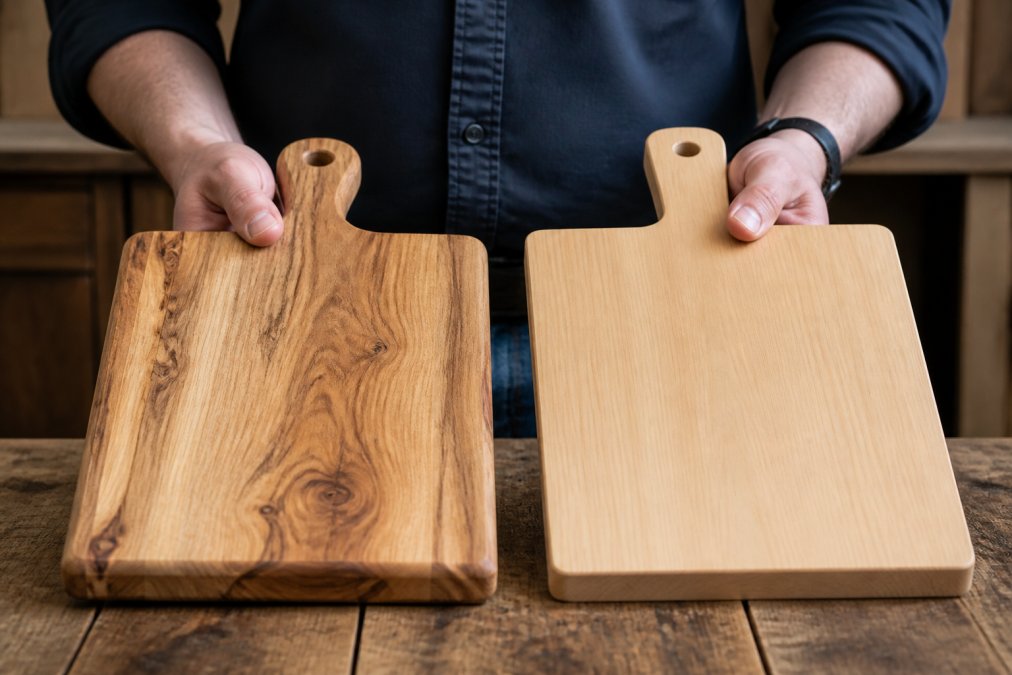
The practical gap shows up in three places: material selection, how the piece is finished, and whether anyone inspected it before it shipped. Mass-produced gifts are optimized for production speed and cost. Handcrafted pieces are optimized for longevity. That difference is visible on the shelf once you know what to look for.
Quick Comparison Table
| Factor | Heirloom Quality | Mass Produced |
|---|---|---|
| Material | Solid, selected wood or natural fiber | Synthetic materials, veneer, composites |
| Production | Small-batch, hand-finished | Assembly line, standardized |
| Standardization | Each piece varies slightly | Identical units |
| Repairability | Often refinishable | Usually disposable |
| Cost logic | Higher upfront, longer lifespan | Lower upfront, shorter lifespan |
| Emotional resonance | Tied to a person or occasion | Generic |
What Makes a Gift Heirloom Quality?
Heirloom quality describes an object built with material integrity, hand-finished detail, and enough durability to be passed down rather than discarded. It is a standard of construction, not a marketing label. Three things separate a genuine heirloom piece from a factory-made one.
First, material quality. Solid wood, natural fibers, and real metal outlast particleboard, veneer, and synthetic materials every time. Second, attention to detail. A hand-finished edge, a properly sanded surface, and a clean engraving all signal that a person, not a machine, made a judgment call. Third, longevity by design. A piece meant to last is built so it can be maintained, not thrown away.
A common mistake is assuming price alone proves quality. It doesn't. Plenty of expensive gifts are still assembly-line products with a premium markup.
The Benefits of Handmade Gifts That Last
The benefits of handmade gifts extend well past the moment of unwrapping, but the strongest argument is not emotional, it is arithmetic. A handcrafted piece carries the maker's decisions in it: which wood, how it was cut, how it was finished. That trace of human attention is what gives an object staying power in a home. The practical payoff shows up in three places most buying guides never calculate: cost per year of use, repair versus replacement, and resale or hand-down value.
Start with cost per use. The logic is simple: divide the purchase price by the number of years you realistically expect to use the item, then divide again by how often you use it. A solid hardwood cutting board priced around $80 that sees daily use for 20 years works out to roughly a penny per use. A $25 composite board that warps, cracks, or delaminates after two years of the same use costs more than a nickel per use, and that is before you count the second and third replacements you buy in the same window. The higher upfront price is not a premium for the label; it is prepaying for years the cheap version cannot reach.
Second, repair economics. Heirloom-quality goods are built so they can be maintained rather than discarded.
How to Identify Quality Craftsmanship in Any Gift
Learning how to identify quality craftsmanship takes about two minutes once you know what to test. Most guides tell you to 'look for quality', which is useless. What follows is an objective checklist built around materials, construction techniques, and finish methods you can verify in a store or from a product listing, plus the small-batch middle ground that most comparisons ignore.
Materials: what to name and what to avoid
- Solid wood vs. veneer. Solid wood shows continuous grain across the face and the end grain on the edges. Veneer shows a thin top layer over a particleboard or MDF core, look at the edge and you will see the seam. Solid wood can be sanded and refinished; veneer cannot.
- Natural fiber vs. synthetic blend. Wool, linen, cotton, and hemp age and can be repaired. Polyester blends pill, hold odors, and cannot be rewoven.
- Real metal vs. plated or coated. Solid brass, copper, and stainless steel patina and can be polished. Plated metal flakes at the edges and cannot be restored once the coating wears through.
Construction: the joints tell the story
- Joinery. Dovetail, mortise-and-tenon, and box joints are cut to interlock and hold under load. Glue-and-staple, butt joints, and dowel-only construction are faster and cheaper and fail sooner.
- Fasteners. Visible screws driven into end grain are a warning sign, end grain does not hold screws well. Hidden joinery or through-tenons signal a maker who expected the piece to be used.
- Weight and balance. A solid piece has heft proportional to its size. A hollow or composite piece feels light for its footprint. Pick it up; the hand knows before the eye does.
Finish: how the surface was treated
- Hand-finished vs. sprayed. Hand-sanded and oiled surfaces have slight variation and a depth you can feel. Factory-sprayed lacquer is perfectly uniform and often hides poor surface prep underneath.
- Engraving vs. printing. Deep, cut engraving holds up to cleaning and handling. Shallow printed or laser-etched text fades with use. Ask which method is used.
- Care instructions. A maker who can explain maintenance, which oil, how often, what to avoid, built the piece to be maintained. If the seller cannot answer, they probably did not build it to last.
The middle ground most guides skip
Not every well-made gift is strictly handmade, and not every factory product is disposable. Small-batch manufacturing, a workshop cutting and finishing a few hundred pieces a year with real quality control, sits between the two extremes. The tell is not the word 'handmade' on the label; it is whether the seller can name the material, the finish, and the person or team who made the piece.
The five-year test
Ask one question before you buy: what happens if this cracks, warps, or fails in five years? A maker building for generational value will have an answer, refinish it, re-oil it, send it back. A seller moving assembly-line stock will offer a return window and nothing more. That single question separates heirloom quality from heirloom marketing faster than any checklist.
The Sentimental Value of Personalized Gifts
The sentimental value of personalized gifts comes from specificity. A monogrammed board or an engraved frame is tied to a name, a date, a family. That connection is what turns an object into something a family keeps.
What to Ignore: Marketing Claims vs. Real Heirloom Quality
Most "heirloom" labels are marketing, not a construction standard. No certification body polices the word, so any seller can print it on a box. The fix is to test the claim against the object itself.
Conclusion
The challenge with gifting is that most gifts are designed to be forgotten, replaced within a year or two by the next occasion. Choosing heirloom quality means choosing the opposite: a piece built to stay. Copper Fox Co makes that choice easier with handmade, personalized cutting boards, custom candles, and monogrammed frames, each one customizable and built for real use in a real home.

Frequently Asked Questions
What defines a gift as heirloom quality?
A gift earns heirloom quality through material quality, craftsmanship, and durability. Look for solid wood rather than synthetic materials, hand-finished edges, and joinery that will not loosen over time. Heirloom items are built to be used and passed down, not replaced every few years. They also gain character with age, like a cutting board that develops a rich patina.
Are handmade gifts more sustainable than mass-produced items?
Handmade gifts are often more sustainable because they are made in small-batch production with less waste and fewer resources. Mass-produced items are optimized for production speed and cost optimization, which can lead to throwaway culture. Choosing handcrafted gifts supports ethical production and reduces the cycle of replacing cheap items. The longevity of heirloom pieces further lowers their environmental impact over time.
Why do heirloom-quality gifts hold more sentimental value?
Heirloom-quality gifts carry sentimental value because they represent intentional gifting, not a last-minute purchase. A personalized cutting board engraved with a family recipe or a monogrammed frame becomes a tangible link to a specific moment. The emotional resonance grows as the item is used and eventually passed down. Mass-produced gifts rarely create that same family legacy.
Is it worth paying more for heirloom-quality home decor?
Yes, if you consider cost-benefit analysis over time. A $79.99 personalized heirloom cutting board from Copper Fox Co may cost more upfront than a $20 factory-made board, but it can last decades. Replacing a cheap board every two years adds up quickly. Heirloom pieces also offer generational value and avoid the hidden costs of constant replacement.
Shop Copper Fox Co and give a gift that earns its place on the counter for decades, not months.